
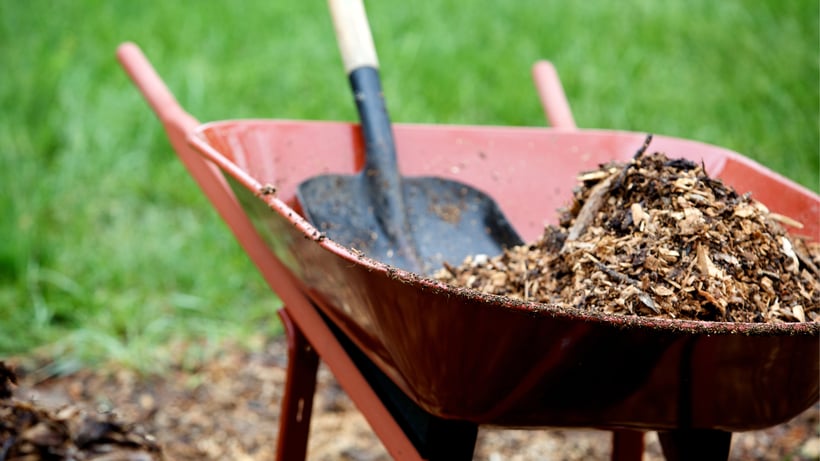
Close up of a red wheelbarrow filled with fresh mulch and a garden shovel resting inside. The wheelbarrow sits on a green lawn, illustrating spring mulching and landscape maintenance for commercial properties.
For facility managers, spring isn't just about the flowers blooming; it’s about the massive logistical puzzle of preparing multiple properties for the heat of summer. You are likely juggling tight budgets, vendor schedules, and the constant pressure to keep your sites looking prestigious.
One of the most effective tools in your arsenal is also one of the most overlooked: a fresh layer of mulch. When done correctly, spring mulching is far more than a cosmetic upgrade. It is a strategic move that allows you to "do more with less" by drastically reducing water consumption, suppressing labor-intensive weeds, and protecting your landscaping investment.
In this guide, we will break down the "why" and "how" of commercial mulching, helping you make informed decisions for your properties this season.
Why Mulching is a Game-Changer for Commercial Facilities
If you manage a retail center, an office park, or a healthcare facility, your exterior is the first thing clients and tenants see. But beyond the curb appeal, mulch serves several critical mechanical functions for your commercial grounds maintenance.
1. Massive Water Conservation
Water is one of the highest variable costs in property management. Research shows that a 2- to 3-inch layer of organic mulch can reduce irrigation needs by 20% to 25%.
Mulch acts as a physical barrier between the sun and the soil. It prevents the wind and heat from wicking away moisture, ensuring that the water your irrigation system provides actually reaches the roots rather than evaporating into the air. For Kathy, this means lower utility bills and less wear and tear on expensive irrigation hardware.
2. Temperature Regulation
Just as insulation keeps a building at a steady temperature, mulch insulates the soil. In the peak of summer, soil temperatures can soar, causing "root bake" and killing off expensive perennials and shrubs. Mulch can keep the soil 8 to 13 degrees cooler, reducing plant stress and the need for costly replacements.
3. Natural Weed Control
Weeds are the bane of any facility manager's existence. They make a property look neglected and require constant labor to remove. A thick layer of mulch blocks sunlight from reaching weed seeds, preventing them from germinating. This reduces the need for chemical herbicides and manual weeding, allowing your grounds maintenance service to focus on more specialized tasks.
Choosing the Right Mulch for Your Property
Not all mulch is created equal. Depending on your property’s specific needs and aesthetic, you’ll want to choose a material that balances cost-effectiveness with performance.
- Shredded Hardwood: This is the industry standard for commercial landscaping services. It mats down well, making it resistant to being blown away by leaf blowers or washed away during heavy spring rains.
- Pine Bark: Known for its longevity and ability to maintain its color, though it can "float" more easily than hardwood in flood-prone areas.
- Cedar Mulch: Naturally insect-resistant and offers a pleasant aroma, often used in high-traffic pedestrian areas or near building entrances.
- Dyed Mulches: Available in black, brown, or red, these provide a sharp, high-contrast look that lasts longer than natural wood colors. However, ensure your vendor uses food-grade dyes that won't harm your plantings or the local water table.
The ROI of "Doing More With Less"
As a facility manager, you are often asked to cut costs without sacrificing quality. Mulching is the ultimate ROI activity.
Consider the "Replacement Cost" factor. Replacing a mature 15-foot ornamental tree because it died of drought stress can cost thousands of dollars. Spending a fraction of that on annual mulching protects that asset. When you multiply this across several locations, the savings become significant.
By investing in high-quality commercial property maintenance services, you move from reactive maintenance (replacing dead plants) to proactive management (protecting existing ones).
Best Practices for Spring Mulching
If you notice your mulch looks thin or has turned gray, it’s time to schedule a refresh. Here are the steps your maintenance partner should be taking:
- Edging: Before a single bag of mulch is laid, your crew should "cut an edge." This creates a clean, 3-to-4-inch deep trench between the grass and the bed. It prevents grass from encroaching and gives the property that crisp, professional look Kathy’s stakeholders expect.
- Weeding and Pre-Emergent: Clear existing weeds first. Applying a pre-emergent herbicide under the mulch provides a second layer of defense against summer weeds.
- The Goldilocks Layer: Aim for 2 to 3 inches. Too thin, and you lose the water-saving benefits. Too thick (over 4 inches), and you can actually suffocate plant roots or create a habitat for rot and pests.
- Avoid the "Mulch Volcano": One of the most common mistakes is piling mulch up against the trunks of trees. This traps moisture against the bark, leading to rot and disease. Your vendor should keep mulch a few inches away from the trunk base.
Why a National Partner Makes Sense for Facility Managers
If you are managing properties in different states, the logistics of spring cleanup can be a nightmare. Soil types vary, regional plant needs differ, and coordinating ten different local landscapers takes up your entire week.
This is where a national partner like Strategic Grounds adds value. We provide a single point of contact for all your exterior commercial property services.
- Consistency: Every site looks the same, regardless of location. Your brand standards are maintained from New York to California.
- Simplified Invoicing: No more chasing down a dozen different invoices. We consolidate your billing, making life easier for your accounting department.
- Strategic Planning: We don’t just mow and mulch. We look at your property holistically, from parking lot maintenance to snow removal, ensuring that your spring mulching doesn’t interfere with other scheduled repairs like sealcoating or line striping.
Take Action Today
Spring is the optimal window to lock in soil moisture before the summer heat hits. If you haven't reviewed your grounds maintenance plan for this year, now is the time to act.
What to do next:
- Walk the property: If you notice bare soil or "grayed-out" mulch, your plants are currently losing water.
- Check the depth: Use a ruler or a finger to check mulch depth. If it's less than 2 inches, it's not doing its job.
- Consolidate your vendors: If you’re struggling to keep up with multiple landscaping companies, consider the efficiency of a national partner.
Ready to simplify your property management and save on your water bill this summer? Get a quote from Strategic Grounds today and let us handle the heavy lifting. Whether it's one site or one hundred, we bring the expertise and reliability you need to keep your grounds looking their best.